Integrating MARPE with Clear Aligners & SFOT
NYC | December 4-5, 2026 | 15 CE Hours
Your aligners can't widen a skeletal maxilla.
Here's what can.
Adult Skeletal Expansion and Interdisciplinary Treatment Planning with Dr. Lena Sapozhnikoff
Two days on diagnosing transverse deficiency, planning and managing MARPE, and integrating it with clear aligner therapy, plus the phenotype-driven planning that tells you when a case needs more than expansion.
The case tracked.
It still didn't hold.
The setup looked right and the aligners fit. Then the posterior cross-bite crept back, the buccal corridors stayed dark, or you were quietly heading toward extractions to make room for what was really a width problem.
Clear aligners have real limits in the transverse dimension. When a skeletal deficiency is masked by dentoalveolar compensation, tooth movement alone means tipping crowns off thin bone. That's how you get relapse and periodontal consequences.
The fix is diagnosing the skeleton correctly before you design the case. Dr. Lena teaches the full sequence over two days.
Day 1:
Integrating Adult Maxillary Skeletal Expansion with Clear Aligner Therapy
7.5 CE hours | Lecture
Diagnose it. Skeletal versus dentoalveolar presentations, CBCT transverse measurement, buccal corridor and arch form analysis, and the airway connection: nasal resistance, sleep-disordered breathing, and chairside screening.
Choose the approach. Why tooth-borne expansion falls short in the skeletally mature patient, what the comparative outcome data show, and how bone-borne designs change the picture.
Select your patients. Suture maturation staging, the traits of the predictable adult candidate, and how to manage the non-responding expansion.
Plan it. Imaging analysis, arch decompensation, and anchorage selection for each patient.
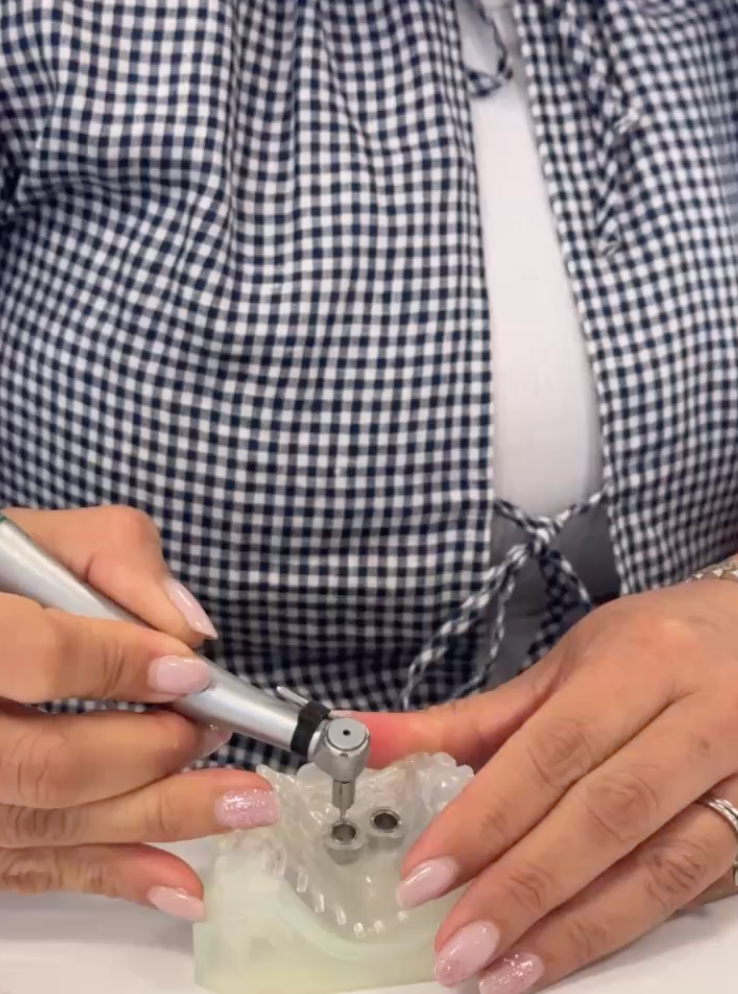
Execute it. Appliance design, lab communication, and insertion protocols, plus activation, aligner integration, complications, and treated case review.
Day 2:
Surgically Facilitated Orthodontic Therapy: Phenotype-Driven Planning for the Aligner Practice
7.5 CE hours | Lecture and hands-on
Know your limits. The 2017 reclassification of periodontal phenotype, and how gingival phenotype and bone morphotype should shape your plan.
Plan movement the bone can support. Alveolar augmentation, decompensation, and how to coordinate surgical and aligner phases.
Solve the Bolton problem. Anterior and overall ratios, interproximal reduction, and restorative sequencing.
Sell the plan. How to structure the diagnostic consultation, present alternatives, and set patient expectations.
Hands-on treatment planning workshop (2 hours). Work real planned tooth movement against CBCT anatomy, then formulate and defend the surgical recommendation.
Your cases. Submit your own for faculty-guided planning and open discussion.
Meet Your Educator
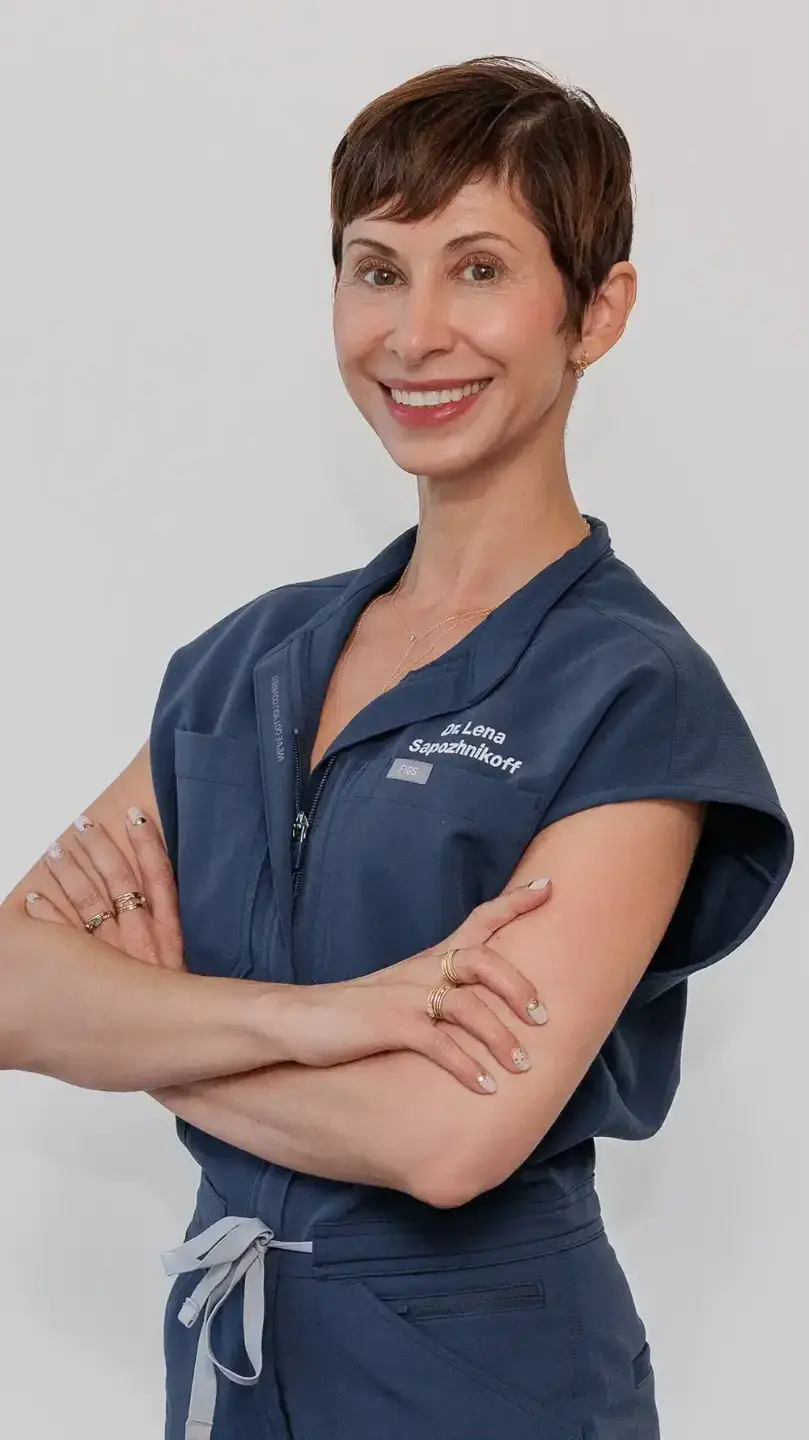
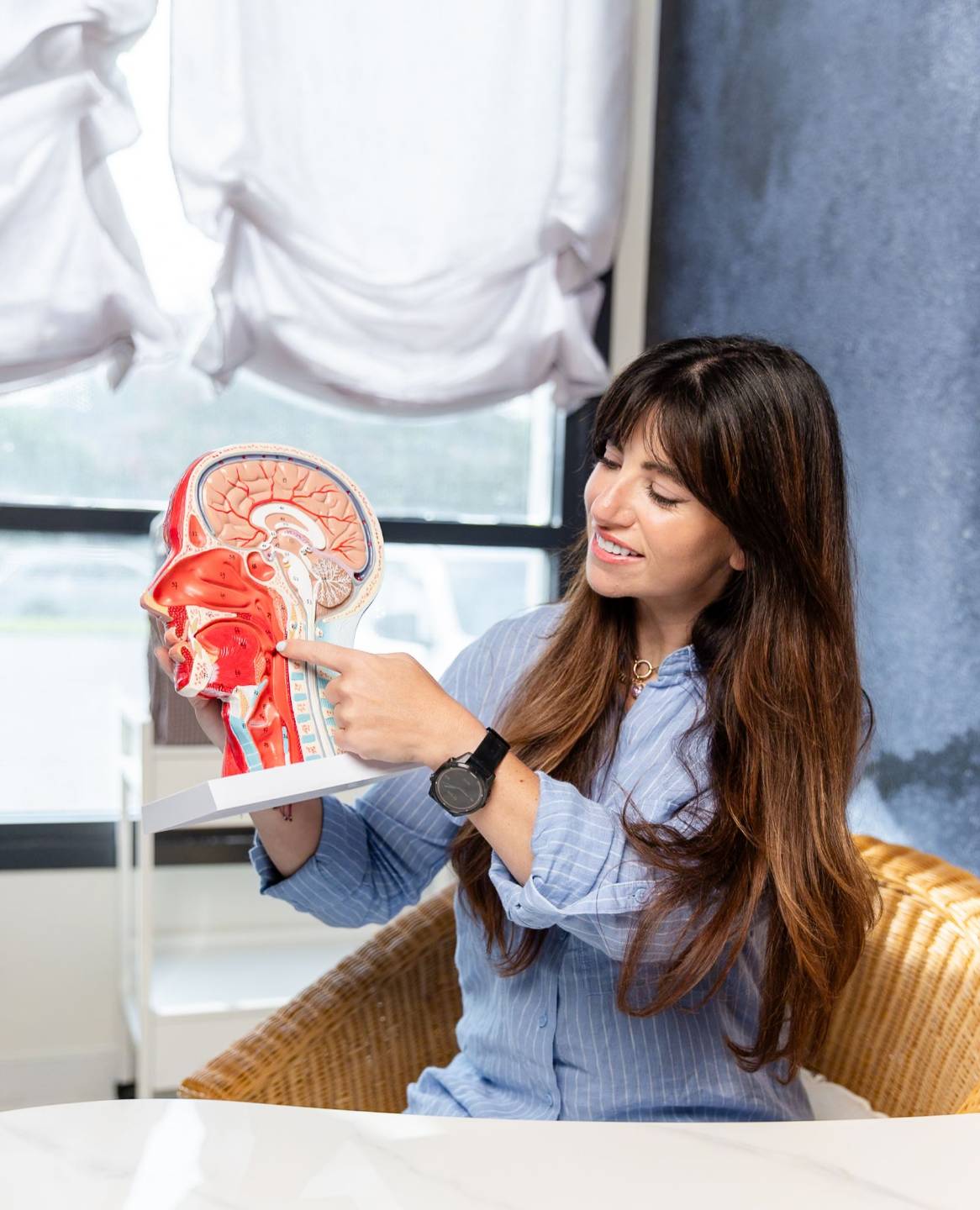
Dr. Lena Sapozhnikoff
Dr. Lena Sapozhnikoff is a comprehensive, whole-body, and airway-focused general dentist based in New York City. She earned her BA/MS in Molecular and Cell Biology from Brandeis University and earned her DDS from the Columbia University College of Dental Medicine.
Her practice blends advanced orthodontics (including MARPE and Invisalign), airway function, cosmetic enhancement, and restorative dentistry. She emphasizes holistic, complete-health dentistry, focusing on the connection between oral health, sleep-disordered breathing, and overall wellness.
Dr. Sapozhnikoff teaches and mentors other dental and medical professionals on airway screening, MARPE protocols, and adult/pediatric orthodontics.
What You'll Walk Away Able to Do
- Tell skeletal from dentoalveolar. Use clinical findings, digital setup, and a CBCT transverse measurement protocol you can repeat on every case.
- Choose the right candidate and the right expansion. Stage midpalatal suture maturation, weigh age and anatomy, and decide between tooth-borne, tooth-and-bone-borne, and bone-borne designs.
- Know when expansion alone isn't the answer. Recognize when a case calls for adjunctive corticotomy, a surgically assisted approach, or distraction osteogenesis.
- Plan and place with confidence. Select anchorage sites from palatal anatomy and bone depth, write the lab prescription, and manage insertion angulation to avoid device fracture.
- Run expansion and aligners together. Set activation schedules, confirm sutural separation, and build the aligner setup around active expansion, including diastema management.
- Plan around the periodontal phenotype. Read planned root movement against the alveolar envelope, site by site, and know when surgically facilitated orthodontics protects the outcome.
- Catch what gets missed. Diagnose Bolton discrepancy from the digital setup before it costs you at the finish.
- Present the case and build your referral network. Get patients to yes on the treatment plan, and know when to refer to periodontics, ENT, oral surgery, or sleep medicine.
You'll leave with a repeatable protocol, not a list of appliance options.
this is for:
General dentists and orthodontists who offer clear aligner therapy, or want to, and are tired of running into cases where the aligner alone can't do the job.
——————
Dates: December 4-5, 2026
Location: NYC
CE: 15 hours
Investment: $3,400